
Night Vision 2026: Tubed vs Digital Comparison.
Night Vision 2026: Is the Gap Between Tubed and Digital Finally Gone?
Published by: The NightVisionExperts Team
For decades, there wasn’t much of a "Gen 3 vs. Digital" debate. If you wanted serious performance, you went analog (tubed). If you wanted a budget toy, you went digital. But here we are in 2026, and that gap hasn't just narrowed – it’s been transformed.
The 2026 Analog Reality: Why Gen 3 Still Rules the "Zero Light" Space
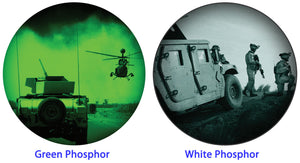
Despite the massive leaps in sensor technology, Gen 3 Thin-Filmed and Unfilmed White Phosphor tubes remain the gold standard for high-stakes environments.
In environments with "Zero Ambient Light" - think deep forest canopy or windowless basements - analog still offers a level of instantaneous performance that digital sensors struggle to match without active Infrared (IR) illuminator. For those instances where even the flash of an ultracovert light source might be a question of life or death, analog is still king.
The Digital Breakthrough: 4K+ Sensors and Low-Latency Processing
Where we’ve seen the biggest shift this year is in the low-latency processing of digital units. The "lag" or "ghosting" that plagued digital units five years ago is virtually non-existent in the 2026 flagship models.
Why Digital is winning the "Value" war:
- On-Board Recording: No more clunky external adapters; high-definition 4K footage is now standard.
- Day/Night Versatility: Unlike tubed units, which are susceptible to "light shock," digital sensors can transition from high-noon sun to midnight darkness without a hiccup.
- Full Integration: Smart rangefinding and ballistic calculators are now seamlessly overlaid on the digital display.
The Expert Verdict: Which Should You Choose Today?
If your mission involves clandestine operations where you can’t risk an IR signature, stick with Gen 3 White Phosphor. The depth of field and light-gathering capability in near-total darkness is still unmatched.
However, for 90% of hunters and security professionals, 2026 digital systems offer more "bang for the buck." With the ability to record your hunt and use the same optic in the daylight for zeroing, the utility is simply too high to ignore.
- Stewart Firman

Comments 0